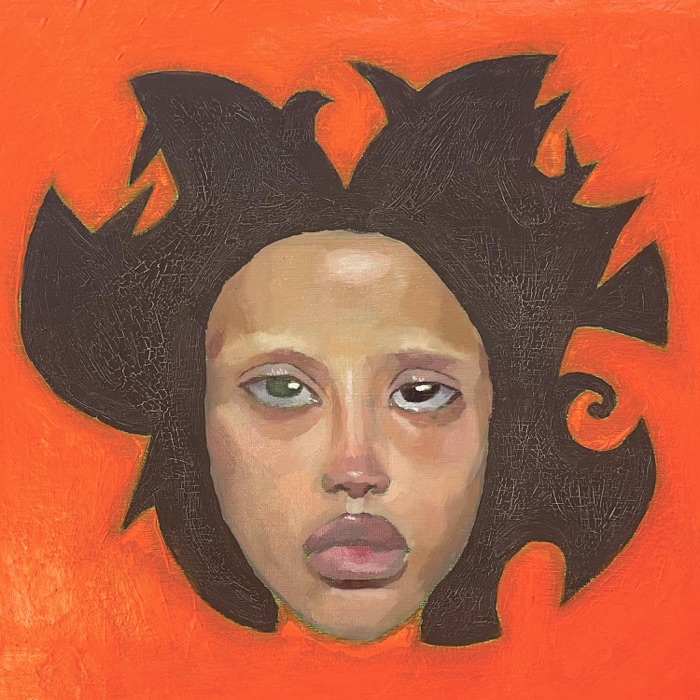
Devagar Que A Vida É Curta: the folk record that will not slow down
Ana Lua Caiano runs Portuguese folk through a laptop at club volume. Fifteen tracks, most of them under three minutes, one long argument about speed.
BY JOLT Staff · NOV 9 2026 · 3 min readDevagar Que A Vida É Curta runs to fifteen tracks, most of them over before you have settled into a posture, and the pulse almost never drops. Ana Lua Caiano sings, produces and makes visual work; here she takes the Portuguese folk music she grew up with and puts it through a computer at club volume. Voice and machine sit at the same level, handclap and kick, and nothing is smoothed over to make them agree.
She grew up in Lisbon in a house where the protest singers José Afonso and Sérgio Godinho were on the stereo. That is the record's inheritance: songs built to be sung by a crowd and understood as an argument. Two earlier releases, Cheguei Tarde A Ontem in 2022 and Vou ficar neste quadrado in 2024, set her up as a singer and producer working alone. This one comes out on Glitterbeat, released November 6, and the loudness is less interesting than the impatience.
“Life is beautiful, beautiful, beautiful / Oh life, run slowly… Death is near, move fast…”
The title translates loosely as go slowly, life is short. Caiano has said it came from a saying of her grandfather's, and that as a child she took it the wrong way round: if life is short, hurry. She reads it as an instruction now, to slow down and be in the day, and she has said the songs came out of the tension between the rush and the intention to stop rushing. The running order states the case first: the album opens with Procissão Dos Dias and ends with Procissão Dos Mortos, a parade of days and a parade of the dead.
The sound is a stack. Caiano multitracks her voice into three or four assertive lines, so a single melody arrives as a small crowd. Under it the percussion is frantic, computer-made and mixed hard, and the handclaps on Uma Vida A Menos sound like a room of people keeping time, not a sample. The traditional forms give her the melodic shapes and the call and response; the DAW gives her the low end and the edits. Nothing about the join is nostalgic or polite.
The title track is the manifesto and it lasts forty-three seconds, words packed in so tight the phrasing has to elbow through them: life is beautiful, run slowly, death is near, move fast. Come, Come, Cresce sits on a low reverberating sound and carries the oldest instruction on the record, eat and be merry, with a sting in the second line that turns the invitation into a threat. Ai, Digo, Digo brings in Stereossauro and a crunk-like bounce, two competing sets of vocal phrases arguing about people who talk and never act. Uma Vida A Menos puts handclaps under a plain demand: stop spending your life on work and the commute.
Meu Amor, Fui is where the pressure drops. The percussion steps back, the record briefly suggests calm, and then the drums come back and the calm turns out to be a hinge rather than a rest. The guests widen the frame elsewhere: Sages comme des sauvages on A Bala Nunca Fez Amigos / Du Sang Sur Les Mains, and Bandua, Edgar Valente and Tempura the Purple Boy on Hoje É Segunda. The intensity holds from the first procession to the last.
It is for people who like their folk music sped up and their electronic music with an accent, and for anyone who has heard a singer front a dance record without a band behind her and preferred it that way. Put it on for the walk between the station and the door.
The relentlessness is the cost. Fifteen tracks at a near constant pitch means the two procession pieces at either end are gestures rather than compositions, gone before they establish a shape, and the one calm, on Meu Amor, Fui, is over almost as soon as you notice it. Call that a small complaint, weighed against a record that has clearly decided what it is.
The score is 4. Short-tempered, disciplined, built to be played loud in a small room, it makes its case in the shortest track here and then keeps making it to the end. Noticing the rush is the trick.