Atlas Sound end fifteen years of silence from inside the attic
Bradford Cox's fourth Atlas Sound album arrived with no warning on 4AD: ten songs played alone on an eight-track in his Atlanta attic, all of it night work.
BY JOLT Staff · NOV 21 2026 · 4 min readThanatos is the first Atlas Sound album in fifteen years, and Bradford Cox made it alone, at night, in the attic of his house. Ten tracks, one portable eight-track recorder, every instrument and every vocal his. It landed unannounced on 4AD as the label's 1,000th release, and it asks you to meet it where it was made: indoors, late, with the door shut.
Atlas Sound has been Cox's solo room since Let the Blind Lead Those Who Can See but Cannot Feel in 2008, through Logos the following year and Parallax in 2011. Then silence under that name. Deerhunter released Why Hasn't Everything Already Disappeared? in 2019 and went dormant, and Cox went with it, bar a noise set in an Athens, Georgia vintage market in 2023 and a run of NTS Radio shows in 2025. The return was telegraphed in weeks, not months. He was added to the Making Time lineup in Philadelphia seven days before playing it on September 20, 2026, his first set in seven years, unreleased material only. "Octoberland" followed on October 30 with a video. Thanatos arrived on November 20, with vinyl due next year.
“Virginia Woolf accessed her enormous eye by leaving the house. Bradford Cox finds it by burrowing deeper inside the familiar shell that is his home.”
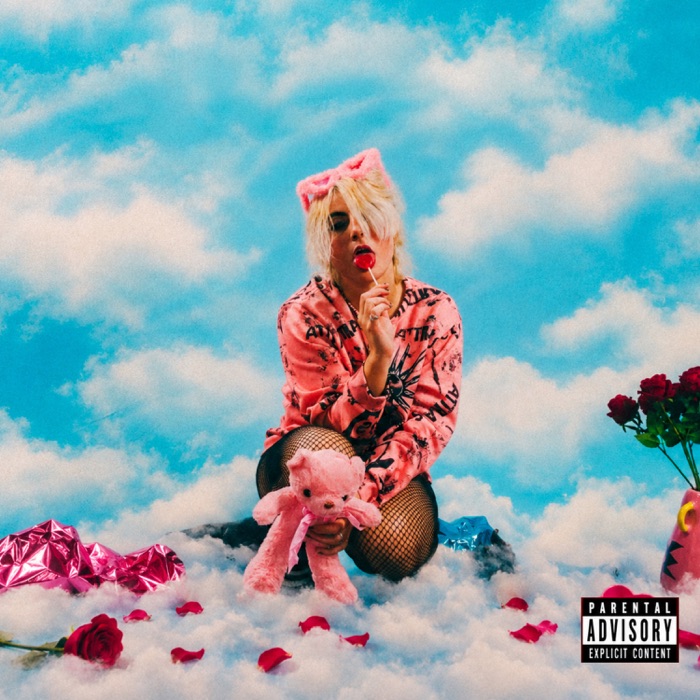
The record was written, performed and recorded by Cox in the attic of his home in Grant Park, Atlanta, on a Tascam DP-008, then mastered by Heba Kadry. The cover is a photograph by Javier Morales of a sculpture by Chris Reynolds. Cox's late dog Faulkner is credited with emotional support, which is the least cynical credit on a major label release this year. Cate Le Bon, a longtime collaborator, wrote the biography that came with it: "Virginia Woolf accessed her enormous eye by leaving the house. Bradford Cox finds it by burrowing deeper inside the familiar shell that is his home." The announcement says the album completes the trilogy of Logos and Parallax. It also shipped with a scent map and a short film, A Visit With Bradford Cox.
The sound is one man and a small machine, and the machine sets the terms. Nothing was deleted. Passes were painted over the last, new feeling or repeated gesture laid on top of what was already there, so the surface thickens as the record runs and the takes stay as takes. Vocals are performed rather than assembled. Instruments arrive with urgency and no polishing. This is an eight-track album in the sense that matters: everything audible was chosen by one person standing in a room at an hour when nobody could interrupt him.
The titles are mostly places, or states dressed as places. "Octoberland" opens it, and it is the only song here the world heard before the record existed, the first Atlas Sound music since 2011 and a strong argument for the fifteen years being spent rather than lost. "Arcadia" follows and names what Octoberland isn't: a place that cannot be reached. "Akron" is a real city in the middle of the first side, a return address on a record that otherwise refuses to say where it is. "Day For Night" takes a film term for faking darkness in daylight and does the opposite of the trick.
"My Ship Sank In Daylight", the longest thing here at 4:21, sits sixth and carries the title's whole idea: the wreck happens in full view, and nobody is coming. "This Property Is Condemned" and "Come And See" are the two titles that read like films, and both land in the back half where the painted-over method has built up the most residue. "Roots Without a Tree", ninth, says the album's condition in four words and leaves it there. "Kora" closes without a summary.
It is for the people who kept Parallax close for fifteen years, and for anyone who treats a record as a place to sit rather than a set of songs to get through. It will not convert a listener who wants the announcement to explain the thing. Bedroom-scale, late-night, one-room music with a real budget behind the mastering: that is the shelf, and there is not much on it this dense.
What does not work is the cost of the method. Painting over takes keeps the emotion and traps the detail, so several of these tracks sit in the mix rather than step out of it, and the record offers no lyrics, no track notes, one single, and a decision to let the titles carry the weight. Le Bon's prose is more vivid than anything the release gives you to hold, and a listener who wants in has to do the burrowing too. Thanatos is a strong record that would be a stronger one if one or two of its ten had been allowed to stay simple instead of accumulating.
Still, the risk was worth it: an artist who went quiet for fifteen years and came back with a hermetic, unannounced, self-played album on the label's thousandth release, with his dog thanked in the credits. It is a 3.5 because the density holds you at arm's length as often as it holds you close, and because the best song on it is the one everybody already heard. The rest rewards the second play more than the first.
The close is a room with the door shut, and Cox inside it, still working at three in the morning. You do not get many records that mean their own biography this exactly.