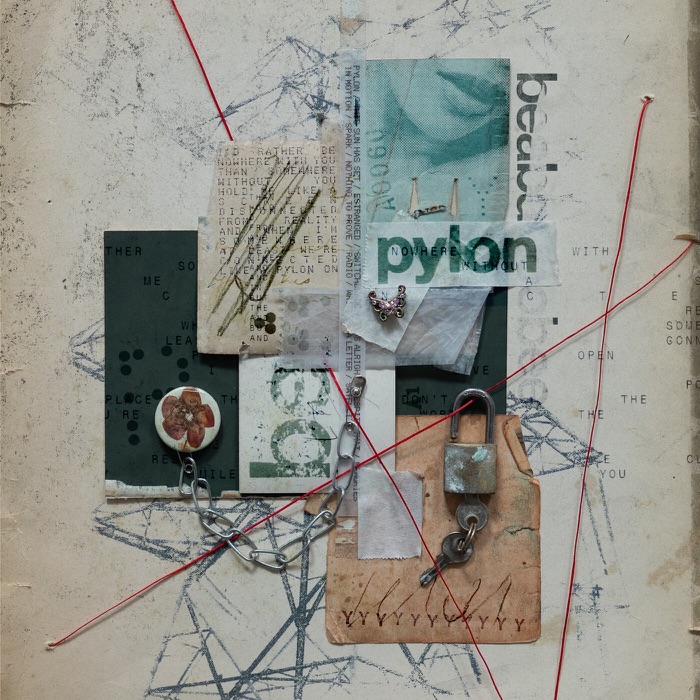
Ezra Collective widen the frame on Here Because of Hope
The London quintet's fourth album traces Black movement across continents and decades, and mostly carries the weight. The horns do not always.
BY JOLT Staff · SEP 15 2026 · 3 min readEzra Collective's fourth album demands plenty and largely delivers. Here Because of Hope is available now via Partisan Records, issued September 11: seventeen songs, four vinyl sides, and a scope stretching from Africa through the Caribbean to London's streets. The groove arrives within the opening minute. So does the orchestration this quintet have turned into their trademark, plus a rhythm section that refuses to stay put. What's fresh is the restraint: across several tracks the horns pull back and allow the song to take charge.
The band emerged from Tomorrow’s Warriors, the jazz programme led by Gary Crosby and Janine Irons, where drummer Femi Koleoso and his brother, bassist TJ Koleoso, encountered saxophonist James Mollison, keyboardist Joe Armon-Jones and trumpeter Dylan Jones, later replaced by Ife Ogunjobi. They drew the name from the prophet Ezra and his practice of studying the greats, then put it to use: You Can’t Steal My Joy in 2019, Where I’m Meant to Be in 2022, the Mercury Prize in 2023 as the first jazz act to win it in the award’s 31-year history, Group of the Year at the BRITs in 2025. Dance, No One’s Watching, from 2024, remains their best, and ‘God Gave Me Feet for Dancing’, the single from that year, appeared on Barack Obama’s list of his 25 favourite songs of the year. They have since performed on some of the biggest stages in the world, and collaborated with Jorja Smith, Fred again.., Loyle Carner and Ca7riel & Paco Amoroso. Here Because of Hope is their fourth album.
“the album traces the movement of Black people across continents and decades, from the music of Africa to the rhythms of the Caribbean, and home to the streets of London”
This is a record about movement, and the group are upfront about it: 'the album follows the migration of Black people across continents and decades, from African music to Caribbean rhythms, and back to London's streets.' Two featured artists bear part of that weight: Pa Salieu on 'Only Love', Lila Iké on 'Well Organised'.
Three brief tracks, 'Part 1', 'Part 2', and 'Part 3', divide the record into movements, with the complete songs positioned between them. The low end stands as the cleanest element present: TJ Koleoso's bass alongside Femi Koleoso's drums drive it, while Armon-Jones's keys fill in around the margins. 'Blow Your Trumpet', 'Sweet Echo', 'Don't Worry', and 'Someday' occupy the front section, 'Birdie Sings', 'The Last Stand', and 'El Corazon' anchor the middle, and 'Bunny on the Rise' follows them.
'Only Love' is the track to start with. Pa Salieu rides a beat that keeps expanding from afro-jazz into rap and then into a chorus made for a festival, and it holds all of that simultaneously. 'Well Organised' does the same thing with pop-reggae: Lila Iké sits lightly over a riddim the band keeps tightening, and it never falls into pastiche. 'Jubilee Feeling' and 'Black Flag', near the end, come back to the dancefloor anthems that have always been this band at their peak: horns up, tempo locked, no apology.
This is for those who arrived via the Mercury win and seek more space in the record. It is for the London jazz scene the band grew up within, Nubya Garcia and Moses Boyd included, and for anyone who has stood at one of their gigs and wanted the set to continue. Play it loud on a Friday. Play it twice and the middle stretch will seem longer than it did.
The horns are the problem. Throughout the album they lack the melodic strength this group has displayed before, and the quintet's musicianship winds up obscured beneath arrangements designed for radio. Hope is likewise the sole feeling available. The record is warm, giving and nearly wholly feel-good, and over seventeen songs that one-dimensionality begins to seem like timidity rather than assurance. Dance, No One's Watching carried more groove, and more guts.
The argument for it remains solid. Four tracks that connect, a rhythm section that never lets up, and two songs, 'Jubilee Feeling' and 'Black Flag', worth the entire runtime. A group this strong can afford a single record that reaches broader than it holds. That is what 4.5 sounds like: an album with a weak point that still beats nearly everything else in its lane.