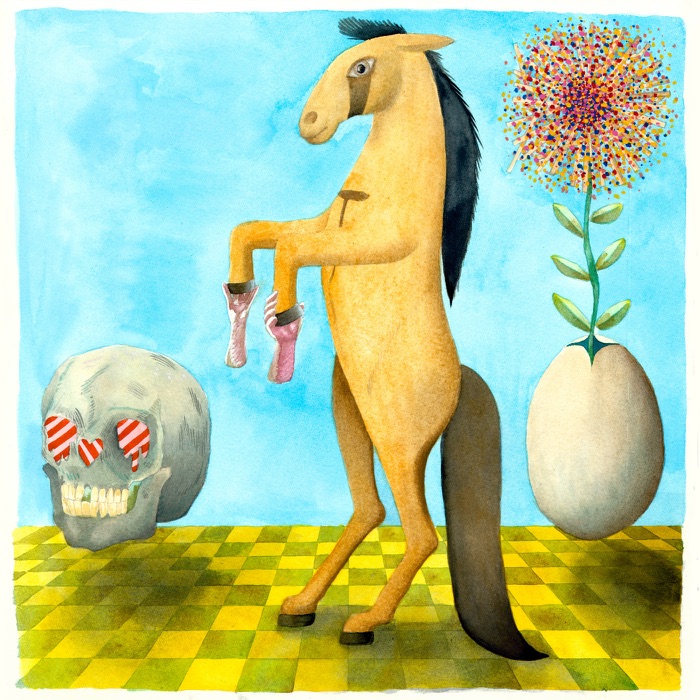
Quiet Forest: Yoshimura's last record reaches vinyl
Yoshimura's final album, CD-only in Japan since 1996, gets remastered and pressed for the first time. Thirty years on, the last forest still holds.
BY JOLT Staff · SEP 12 2026 · 4 min readQuiet Forest is the last record Hiroshi Yoshimura finished. It came out in Japan in 1996 on CD only, and that single pressing stood as the whole of its release life; original copies have been listed at hundreds of pounds on the secondhand market. Temporal Drift's thirtieth anniversary reissue arrives on 13th November with remastered audio, a first ever vinyl pressing, and cassette, CD and digital alongside. Anyone who has spent a decade priced out of a CD has a good day coming. So does the record, which is the softest farewell in the catalogue.
Yoshimura was born in Yokohama in 1940 and had piano lessons from the age of five. Fluxus, Harry Partch and Erik Satie shaped him at Waseda, where he graduated in 1964. By 1972 he was running a computer music group called Anonyme, and Brian Eno's records pointed the way through the rest of the decade. NHK commissioned 'Alma's Cloud' in 1978. The solo debut, Music for Nine Post Cards, arrived in 1982, then Surround and Green in 1986. Flora, cut in 1987, sat unreleased until 2006, three years after his death. He wrote for galleries, museums, train stations and building interiors, taught at Chiba University and Kunitachi College of Music, and worked in the mode Japan named kankyō ongaku, environment music. Light in the Attic began reissuing him in 2017 and worked through Green, Surround and Flora on its WATER COPY imprint between 2020 and 2025. Temporal Drift, out of Los Angeles, takes the last one.
“My encounter with the Hoh Rain Forest, located inside Olympic National Park across the water from Seattle, felt like seeing a whole new world for the first time in my life. Long green fronds draped along the branches, like a scene in which fairies could be heard whispering to one another. But when you try to listen, no sound can be heard. Amidst the mysterious silence, in which no birds or insects make a sound, every living thing seemed to have stopped in its place, only to start dancing when some kind of spell is cast over them.”
Quiet Forest came out of a trip to the Pacific Northwest. Yoshimura described standing in the Hoh Rain Forest, inside Olympic National Park across the water from Seattle, as seeing a new world for the first time: green fronds draped along the branches, fairies whispering somewhere in them, except that no sound could be heard when he listened. No birds, no insects. Everything held still, he wrote, until some spell set it dancing. That is the album's program, and it reads like fair warning about how little this record gives you if you ask it for anything. He composed it, Yoshio Kobayashi mastered it, Jun did the design, Yoichi Ueno carries a voice credit. Prem Promotion put it out on CD in Japan in 1996 and nobody pressed a record.
The music is environment music in the shape he spent a career refining: soft electronic figures that repeat rather than develop, held in long even tones, with the outdoors audible around them. Nothing here is fast and nothing is loud. At ten pieces the album behaves like a walk with a fixed order to it, and the titles do the narrating: Whispering, After Rain, Hoh River, Sunrise, Deep Echoes, Melting Wind, Dancing Creek, Rain Forest, Lullaby of Leaves. The remaster is the only thing that has changed: the audio and the formats are the whole offer.
The title track opens the record and names the forest before anything inside it is named. 'Hoh River' goes back to the national park in his note, the water before the fronds. 'Whispering' is titled for the thing he described that stops the moment you turn toward it. 'After Rain' and 'Melting Wind' are the brief ones, intervals set between the longer pieces rather than pieces standing on their own. 'Dancing Creek' is the longest thing here, a little over seven minutes, and it takes its title from the spell at the end of his note, the moment everything that had been still starts moving. 'Deep Echoes' is the track released ahead of the reissue, which tells you where the label thinks the door is. 'Lullaby of Leaves' shuts it.
This one is for anyone who has worn out Music for Nine Post Cards, Green, or the Kankyo Ongaku compilation, and for anyone who came to ambient through Eno and stopped at the edge of it. It is work music, reading music, the last hour before sleep. It is not for a commute, a party, or a first listen at volume.
The weaknesses sit in the package rather than the record. Remastered audio plus formats is the whole offer, and for an album this hard to find, an edition with something more in it would have been the obvious move. Inside the record, 'After Rain' and 'Melting Wind' are gone before they settle into anything; they read as intervals rather than songs, and the front half carries the cost of them. Neither complaint touches the material itself.
Quiet Forest is a 4. The music holds up, the pressing is long overdue, and the restraint on display is the point rather than the problem. What is missing is extras, not songs. It was never lost. It just took thirty years to get a decent pressing.