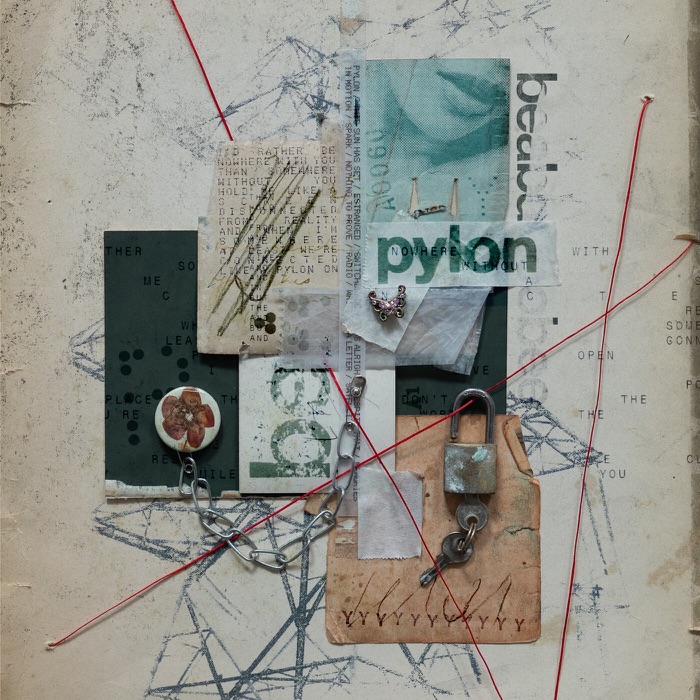
Angel: Lizzy McAlpine takes stock
On her fourth album, fifteen tracks on RCA, McAlpine trades the panic of her early songs for a steadier folk frame. The writing holds up; the running order doesn't always.
BY JOLT Staff · SEP 18 2026 · 4 min readLizzy McAlpine's fourth album is a record about the quiet after. Angel, out September 18 on RCA, runs a minute past an hour, and almost none of it goes looking for the fight. Where Older kept a hand on the wound, this one is interested in what a person keeps once the argument is over: the sweatshirt still on the shelf, the friend who picks up, the father who isn't there to see any of it.
McAlpine grew up in Narberth, outside Philadelphia, started writing songs in sixth grade, and left Berklee in her junior year to do this full time. Give Me a Minute arrived in 2020, written during a semester in Spain. Five Seconds Flat followed in 2022 and carried "Ceilings," the viral hit that made her name and a label she has said she dislikes, along with her first chart placements in the US. She signed to RCA in 2023 and released Older in 2024, then the deluxe edition, Older (and Wiser). Most of the two years since went elsewhere: a Broadway debut as Nellie Collins in Floyd Collins, a part in the film Only What We Carry, a standalone cover of "The House of the Rising Sun" in January 2026. Angel is what she came back with.
“I still have things to work on/That will never end/But I can't do it alone”
She made it in Los Angeles with Mason Stoops and Taylor Mackall, the same pair behind Older, across two years of sessions. The first song written for it was "The Light In The Painting," sketched backstage at a San Francisco tour stop in May 2024, and she has called it the right introduction to the world the record builds. The cover, her first without her own face on it, was made with paint and chalk by the artist tidy.totes. The album takes its name from its closing track.
The palette is wider than Older's and the arrangements are fuller, though nothing here gets loud. Guitar and voice still carry the weight, with piano doing the heavy work where it counts. The frame is '70s Laurel Canyon folk run through present-day indie, and you can hear the lineage in how little the songs are asked to do: a strum, a harmony, a line landing harder because nothing competes with it. McAlpine used to sing from inside the panic. Here she sings from a seat near the door.
The opener sets the terms. "The Light In The Painting" takes a museum cliche and makes it land: "You are the light in the painting/That my eye is drawn to first," she sings, a love song that already knows what it costs to be looked at. "Peach" is the opposite move, a few lines about slicing stone fruit turned into a small argument for being alone, and it's the loosest, best thing here. "Ugly Things," the second single, is an inventory: photographs in wallets, a sweatshirt on a shelf, the objects an ended relationship leaves in the house after it leaves.
"Soldier Of The Road" brings in Fleet Foxes' Robin Pecknold for a song about the unglamorous middle of touring, and the two voices do what a good feature should: they make the road sound like a place two people are stuck in together. "Mason's Song," soft strumming and an apology, carries the record's clearest line about not being finished, "I still have things to work on/That will never end/But I can't do it alone." Then "The Crowd," track thirteen, piano, addressed to her late father. She has put him on the thirteenth track of every album since he died, and this is the plainest of those letters. "I Have A Friend" gets the sharpest single image of the set, a mouth described as a straight line without the lips that used to kiss it.
This is for the people who kept Older on repeat and hoped the next one would hurt differently. It sits beside the folk revival it borrows from and beside anyone writing small songs about big rooms. If you came for "Ceilings," the hook that sticks this time is "Peach," and nobody had to dance to it first.
What does not work is the length. An hour and a minute is a lot to ask of a record this even-keeled, and the middle hands three songs in a row to the same mood before "Mason's Song" resets it. "Our Strange Ways" goes on long after it has made its point. The fuller arrangements also cost the album some tension: where Older let a song crack open, Angel tends the surface, and a few of these cuts would hit harder with less around them.
Nothing here goes looking for the panic of "Ceilings," and the record is stronger for refusing to. A 3.5: patient, well made, and two songs past where it should stop.