Kosmos: Stellardrone's eighth album earns its long middle
Thirteen tracks of ambient drift, self-released and free to share. Stellardrone is best when a piece is allowed to stretch.
BY JOLT Staff · AUG 30 2026 · 3 min readKosmos is the eighth Stellardrone album and the calmest thing you will play this month. Thirteen tracks of ambient and electronic drift, given away for free, built to sit beside a working afternoon rather than in front of it. It is very good at that job. It is only occasionally good at anything else.
Stellardrone is Edgaras, born in Vilnius in 1987 and making music since 2007. The records before this one run from On a Beam of Light in 2009 through Invent the Universe and Sublime in 2010, a split with Seagull Overseas in 2011, Echoes in 2012 and Light Years in 2013. Every one of them went out free, with sharing treated as the point rather than a leak. That is a long career run on principle, and listeners called this one overdue.
“Excellent release. Very chilled. Well done!”
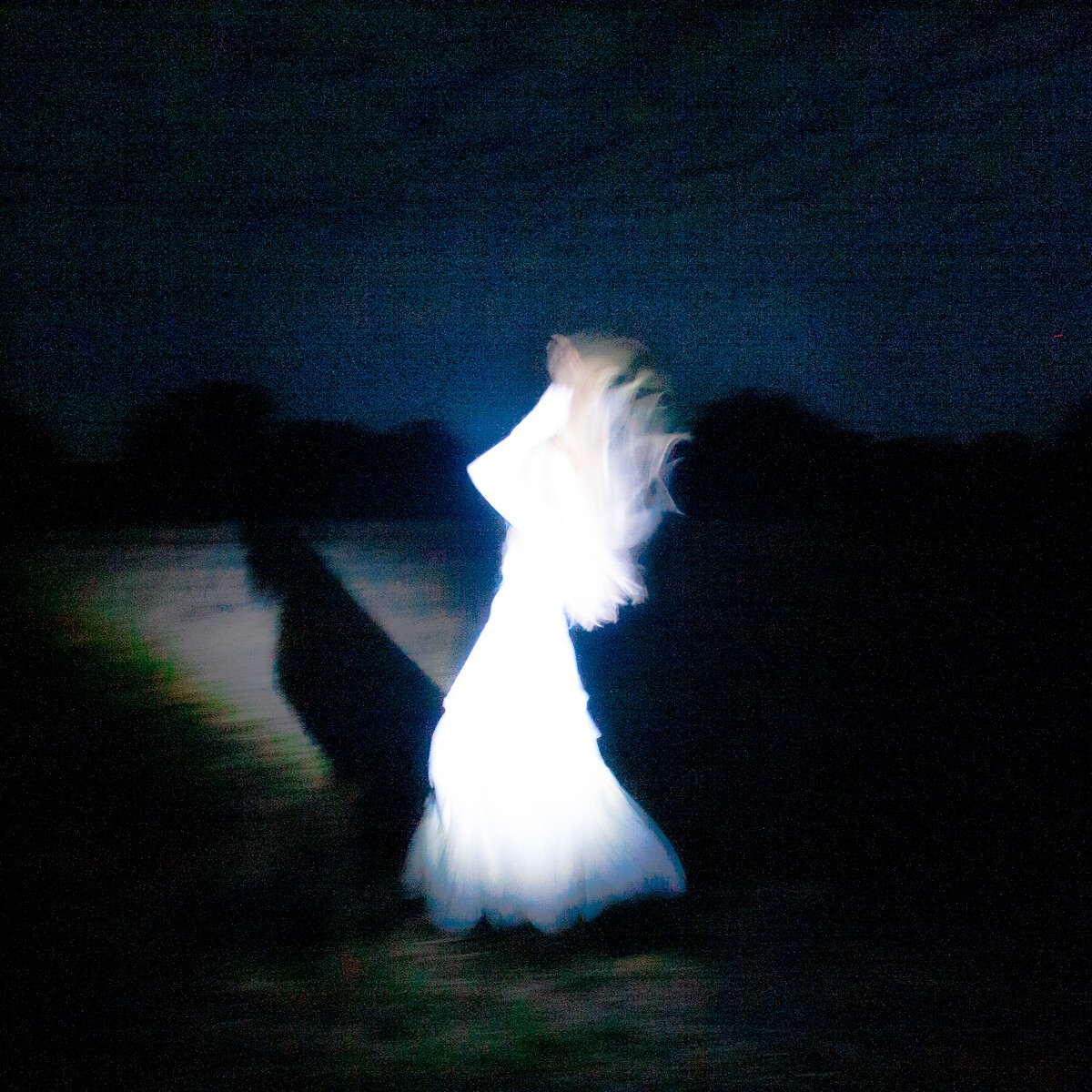
Kosmos is self-released, with no label behind it, out in late August 2026 under a Creative Commons license: name your price, MP3, FLAC, 16-bit/44.1kHz, streaming included. Casey Horner shot the cover photograph and Aaron Marshall designed the artwork. The release model matters to how the record behaves. Nothing here is in a hurry to end.
What it sounds like is one decision repeated thirteen times. The palette is electronic and low, and it moves slowly, with nothing that behaves like a hook and nothing that raises its voice. Transcendence opens without hurry. Crepuscular Rays and Grand Orrery hold the same temperature, and by Big Dipper you know what the next hour holds. Consistency is the method here, and it is also the risk, because a record this even has to earn its length on texture alone.
The middle is where it earns most of that. Invariant is the longest piece on the album, and it is the one that supports the argument, made by a listener below the release, that Stellardrone has grown more complex without losing the fountain he started from. Accretion Disk, the other long track and the one listeners keep naming, follows it, and together they are the record's center of gravity.
Pluto is the shortest cut and lands late, a breath between the long pieces rather than a destination. Oumuamua and Infinite Reach carry the album toward Eternalism, which closes it. Nothing in that sequence is built to feel like an arrival. The titles do the narrative work instead: orreries, accretion disks, molecular clouds, Pluto. That is a whole cosmology spelled out across thirteen titles, and it is the only place Kosmos presses an idea on you.
It is for people who already use ambient as furniture, the ones who put a record on to work or to sleep and measure it by how little it asks. It sits easily next to the ambient records that built that habit, and it will not convert anyone who needs a chorus. Anyone who came to Stellardrone's earlier albums will find the same room with a little more in it. Anyone hoping this is the turn toward beats should look elsewhere.
The flaw is spread across the running order rather than sitting in one track. Three of the shorter pieces function as connective tissue, and a couple of them are interchangeable: Crepuscular Rays, Grand Orrery and Big Dipper could trade places without changing the album's shape. None of them quite justifies its slot. Three fewer tracks would have made a stronger record from the same material.
It still does what it promises, and it does it for free, which is not nothing. Kosmos is a 3.5: even, generous, better in its middle than at its edges. Take it, and start at track six.