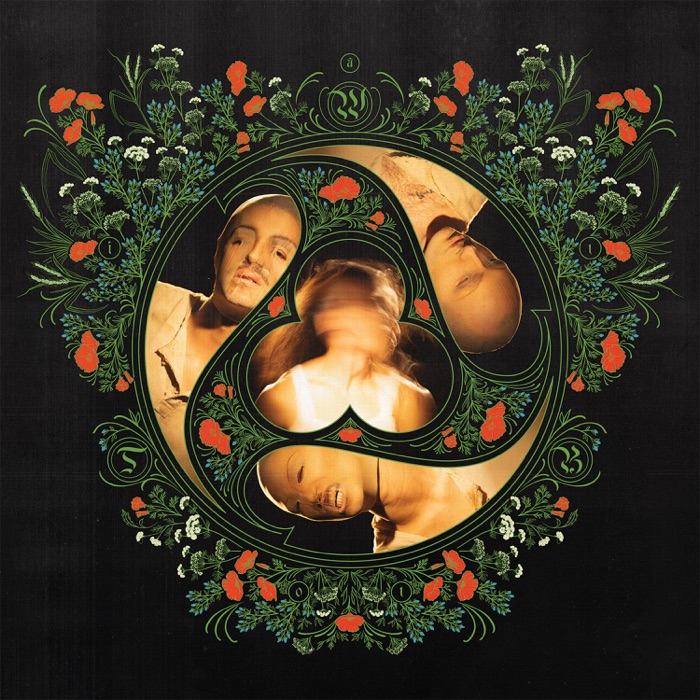
Marina Herlop self-releases Dja Dja and keeps it in one piece
Her fifth album, fifteen tracks, put out without a label and conceived as one unbroken piece of work. The Catalan pianist and singer hands the myth to whoever is listening.
BY JOLT Staff · OCT 9 2026 · 3 min readDja Dja is Marina Herlop's fifth album and the first she has released herself, and it is built to be heard in one sitting. Fifteen tracks, conceived as a single unbroken body of work, with no label standing between her and the release. The claim is bold on paper, and for most of its run the record backs it up.
Herlop is a Catalan pianist and singer, classically trained, born in 1992. She has written in a language of her own construction for years, part borrowed and part invented, so the words are not there to hand you a story. Her first two records, Nanook in 2016 and Babasha in 2018, were piano-led and spare. Pripyat in 2022 and Nekkuja in 2023, both on PAN, opened the electronics up and put her name outside Catalonia, and she has also recorded as half of Myōboku with Òscar Garrobé. Dja Dja follows Nekkuja and moves again.
The new record arrives without a label, which is the first thing to know and, given how tightly it is put together, the least audible. Piano and flute figures are stacked into shapes that do not sit still, and the voice runs above them in close harmony. Every piece keeps its own working parts while staying inside the larger one. The frame she built it on is the Hero's Journey, retold rather than followed, and her reading of it is offered as one reading among many.
The sound is a classically trained pianist in a studio that keeps answering back. The piano holds the centre and is rarely left alone, and the record leans toward long pieces that build by accumulation rather than by chorus. Delicate keyboard and flute figures repeat until they shift colour, and the voice sits above them in sibilant harmony.
Flor De Los Precipicios opens the record. It is an overture: the piano states a figure, the voice answers, the shape reopens, and nothing later is a surprise in kind, only in scale. Heladas and Lilit follow in the first half as hinges rather than destinations. Los Dos Lobos sits later in the run, and As Meigas is the longest stretch here at six and a half minutes.
Vas volant is the only track with a guest on it, Adri GOOR, and the second voice changes the pressure. Jaque, out in July 2026, led the record and is still the most direct thing on it. Bliss is the last of the three singles and sits at fourteen, one track from the end. Muy Heladas closes by picking up the title of the second track, and the album ends where it has already been, which is the point of calling fifteen pieces one work.
This is for people who play records whole and in order. The names that follow it around are fair leads: Fever Ray and Björk point at the vocal treatment, Michael Nyman and Steve Reich at piano patterns used as a floor. Diamanda Galas is the loosest fit of the five and the one worth keeping small. Anyone who needs a chorus to hold on to will find the run long, and anyone who has been following since Nekkuja will find this heavier, slower to open, more deliberate.
The cost of the concept shows up in the middle. When fifteen tracks are written to cohere as one, the connective pieces lose the ability to stand on their own, and a few pass without leaving anything behind. The Hero's Journey does similar damage: the frame explains more than the music needs, and once you know it is there it sits under every track, including the ones that would be stronger without it. Because the words are built from an invented vocabulary, meaning arrives through tone and harmony, so anyone expecting the lyrics to carry the weight will be doing work the record has decided not to do.
Dja Dja is a four. It is the strongest writing she has released, it carries a concept that occasionally gets in its own way, and it is the first record she has made that belongs entirely to her. Start at the top and let it run.