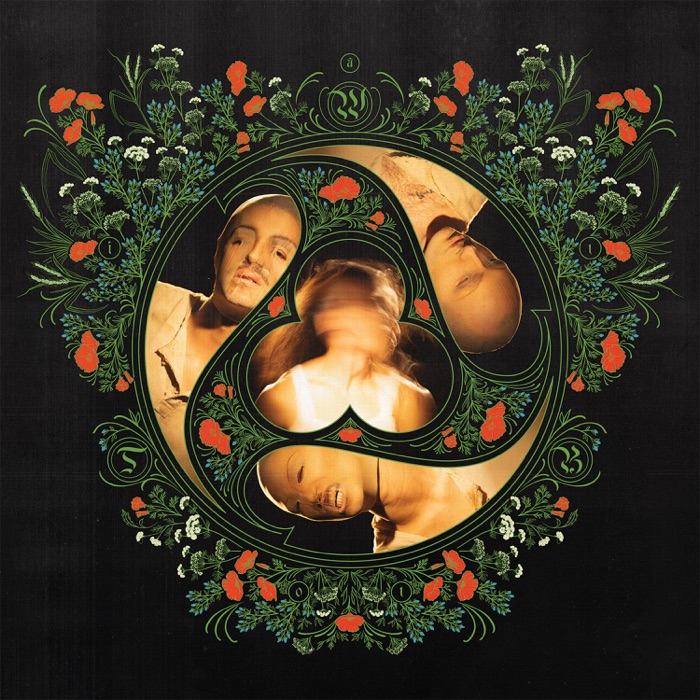
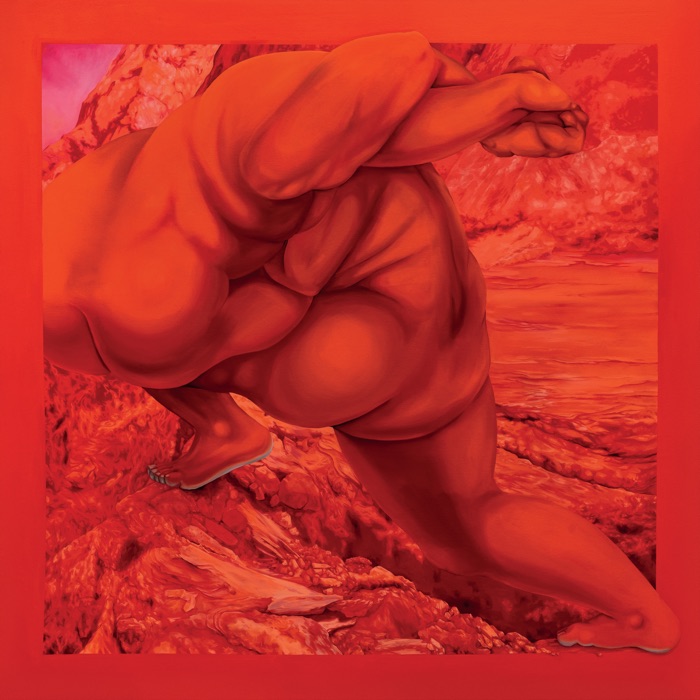
Black Marble: Life in Small Spaces, a coldwave record with the door shut
Chris Stewart's fifth Black Marble album lands on Sacred Bones: eleven tracks of coldwave synth-pop, out August 21, and no interest at all in getting bigger.
BY JOLT Staff · AUG 21 2026 · 3 min readLife in Small Spaces is Black Marble's fifth album, and it does not look for the exit. Eleven tracks run at one register: drum programming at a walking pace, bass doing the work a chorus usually does, synthesizers held long enough that you notice them. Nothing hurries and nothing is wasted. This is a coldwave record made by someone who stopped needing to prove he could make one.
Black Marble began in Brooklyn in 2011 as Chris Stewart's project, with Ty Kube of Team Robespierre on synthesizers. The first EP, Weight Against the Door, arrived on Hardly Art in 2012, followed the same year by the debut album A Different Arrangement, which sat squarely in the coldwave tradition. It's Immaterial came in 2016 on Ghostly International, by then a solo record and a West Coast one. Bigger Than Life landed on Sacred Bones in 2019 with "One Eye Open" ahead of it, Fast Idol followed in 2021, and a set of demos, Cry Yourself to Sleep, filled 2025. Five years between albums of new songs is the longest gap Stewart has taken.
Life in Small Spaces is out August 21 on Sacred Bones, eleven tracks, pressed on vinyl in a limited edition and filed under darkwave, synth-pop, coldwave, post-punk and minimal. Those five words are load-bearing. No producer or studio credits come with the record, which leaves it to make its own case. Mostly that case is restraint.
The palette is the one Stewart has used since the beginning: bass, guitar, synthesizer, his own voice, drum programming underneath all of it. The low end carries the melodies. The synths stay pale, closer to the colour of an old paperback than to anything neon. The voice sits inside the arrangement as one more line, and the record never pushes it up front. These are songs with the volume turned down and the tension left in, and the writing is what holds them up.
The titles keep circling what gets kept and what gets watched. "It Always Comes to Me" opens and states the loop in five words: whatever you put down is what comes back. "Other Man's Dream" takes the album's longest slot and shuts side A on someone else's life seen through a wall. "Guess" is placed sixth, the one structural gamble in the running order.
Side B pairs "Life Without" and "Missing History" as two kinds of erasure, one private and one recorded, and "Panopticon Calls" is the sharpest title here: the watcher's side of the line. "Sonny Boy" closes the album with a name instead of a concept, and after ten titles about absence a name lands hard. "Get Back Up" and "Anything", mid-side A, are the two most direct titles on the record, an instruction and an offer.
This is for the people who filed A Different Arrangement next to Fast Idol and never took either out, and for anyone who found Black Marble through the cold end of the Sacred Bones catalogue. It suits headphones, long walks and rooms you are glad to leave. If you want a record that raises its voice, this one will not.
The flaw is sameness, and it is not a small one. Two sides at one temperature means the middle can pass without a handhold, and "Picture When" and "Guess" are the two most easily lost in the sequence. Nothing here is careless. Plenty of it is familiar, and the album leans on the difference between those two things.
It earns a 3.5 for exactly that reason: a fifth album with no filler and no reach, made by someone who knows the size of the room he works in. Play it twice and it will still be the same size. That is what the title promises.