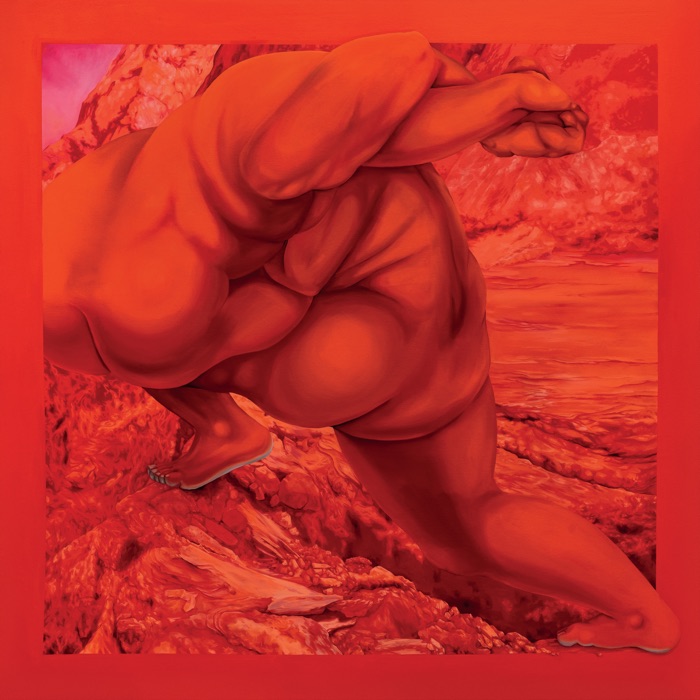
HIGHSIGH: Once Bend's small rooms and returning guests
Thirteen tracks, returning guests and tiny interludes: HIGHSIGH's Once Bend is a record built from small rooms and careful spacing.
BY JOLT Staff · JUL 31 2026 · 2 min readOnce Bend is built from attention to rooms, objects and the people who keep showing up. Across 13 tracks and about 44 minutes, HIGHSIGH surrounds its songs with small guests and smaller interludes. Before a single note is heard, the album reads like a group conversation with a seating plan.
The tracklist is a map. Opener 'Don't Crowd the Eye' runs past five minutes and sets a rule: give things space. 'I Love the Room I Live In' brings Max Jaffe in for the first of three visits, and 'Relax Redux' adds Lia Kohl and Jon Starks. The pattern holds. Booker Stardrum appears twice, Ben LaMar Gay appears twice, and the two short pieces, 'islands of affinity' at 46 seconds and 'outcome inevitable' at 51 seconds, act like commas between statements.
The writing keeps a consistent vocabulary of small interiors. Titles like 'Plastic Designed Spoonlike,' 'Take Care,' and 'Would Be Great' point toward objects and conditional hopes rather than grand gestures. The longest cut, 'Once Bend,' sits second from last, with Gay and Kohl, and only a two-minute coda follows. The title track lands as a settled conclusion, and that is confident sequencing. A 13-track record could feel scattered; this one feels loosely held, with familiar guests returning like people who know where the kettle is.
The weaknesses are structural too. The interludes are so short that they read as connective tissue rather than destinations. 'unrememberable' is named in a way that almost dares you to forget it, which is smarter than it is satisfying. In the middle, four featured tracks in a row, from 'Plastic Designed Spoonlike' through 'Words We Choose,' risk feeling like an itinerary. The architecture is interesting, but the through-line could use a stronger pull.
Once Bend does not announce itself. It asks you not to crowd the eye, then trusts you with a lot of small rooms. The features are spread carefully, the title track sits near the end, and the whole thing is short enough to revisit. On structure and scope alone, it earns a recommendation. A considered record, and a good one.