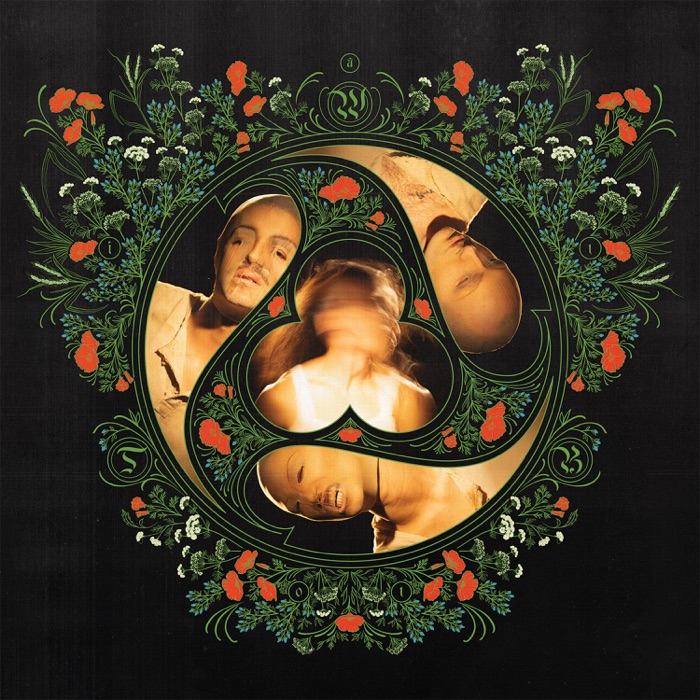
LILA: Mohamed Bourouissa lets the sound lead
The Paris-based, Algeria-born artist has spent years putting sound inside his art. LILA is his solo debut: twelve tracks, each named for someone he could not stop thinking about.
BY JOLT Staff · JUL 24 2026 · 3 min readLILA is Mohamed Bourouissa's debut album, and it does not behave like a photographer's side project. He has been working with sound since 2009. The record runs twelve tracks, each named for a person he was thinking about while he wrote it. The dedications matter less than the texture: weightless synths, Autotuned vocals that arrive already broken, beats that come apart in your hands.
Bourouissa was born in Algeria and works out of Paris, where he built a name as a photographer. Sound kept pulling at him anyway. His first recognizable reference was Temps Morts in 2009, a video work he named after Booba's debut album. In 2017 he made Si Di Kubi, a compilation of experimental sounds from the Arab world, with the Lebanese free improv guitarist Sharif Sehnaoui and Sina Araghi. In 2021 he and the sound designer and programmer Jordan Quiqueret worked out how to turn frequencies produced by an Acacia tree into rhythms on Brutal Family Roots, with poetry from MC Kronic and Nardean. His first retrospective, SIGNAL, ran at Palais de Tokyo. LILA is the first release with only his name on it.
“I see sound as a vector of history and memory, sometimes traumatic”
He wrote and produced the record himself. James Ginzburg mixed it, Rashad Becker mastered it, and it lands July 24 on PAN: the vinyl a 12 inch with a 16 page booklet and a download at €28 or more, the digital at €13 or more. Two guests are named in the announcement, the Franco Senegalese artist Le Diouck and Valentina Fanigliulo, the Italian avant garde figure who records as Mushy and as Phantom Love. The digital tracklist also credits Lion and Assounta. Bourouissa calls LILA a musical object rather than an album, and the titles agree with him: HFC, MG, FZB, NMB, AF, SEUM, MN, JQ, AB. Initials instead of names; the people live in the booklet.
INTRO opens the record the way a room opens: reverberating piano chords, choral echoes, seventy seconds of air let in. The volume stays low and the detail stays high. HFC carries the ghost of a pop song, then loses interest in it and turns into a beatless suite of modular hiccups and bio-mechanical cries drifting toward noise. Nothing later repeats the trick, which is the right decision and also a small loss.
MG comes closest to club music and keeps losing its footing: Le Diouck over quivering drum rolls and pitchy exclamations, the whole thing sweaty and unresolved. AF does the reverse, FM arpeggios floating around words that stay casual and sincere, the music refusing to match the mood. SEUM is the hardest cut here, layered synth drones set against processed croons, xenharmonic chords making the ground unsteady.
Then LILA, and the album finds its center. Warm, hopeful pads sit under Bourouissa's most piercing writing, one line pushed out into the void, what did you say, why should I cry, squeezed through metallic distortion and beats that never settle. It is the plainest sentence on the record and the one that stays. OUTRO, one minute fifty seven, leaves on microtonal hums and rhythms circling each other, a spiral rather than a resolution.
This is for the listener who plays PAN for the ambient end of the catalogue and does not need a beat to arrive on schedule, and for anyone who has walked through a Bourouissa exhibition wondering what the sound in the next room was. It is not for anyone hoping the Booba reference means rap. There is no Booba here, only the residue of a record that pushed him toward this.
The middle sags. MN drifts through tense rhythmic flurries and leaves nothing behind, and JQ is gone in under three minutes before it argues for itself. The initials are a problem too. Without the booklet in your hand a dedication reads as a label, and a record that inventories a life turns back into a tracklist. The guest tracks carry more than the solo ones, an odd result for something this personal.
None of that sinks it. Under forty minutes, twelve tracks, and five of them do something the rest only gestures at. LILA and SEUM are worth the €13 alone. Bourouissa has been circling this since 2009; the first time he lets the sound lead, it holds. Four.