Solar Calf: Patrick Belaga builds a place you have to walk through
The LA cellist's second solo album is nine zones of live woodwind, brass and marimba cut against sequencer moves, made for a world he invented.
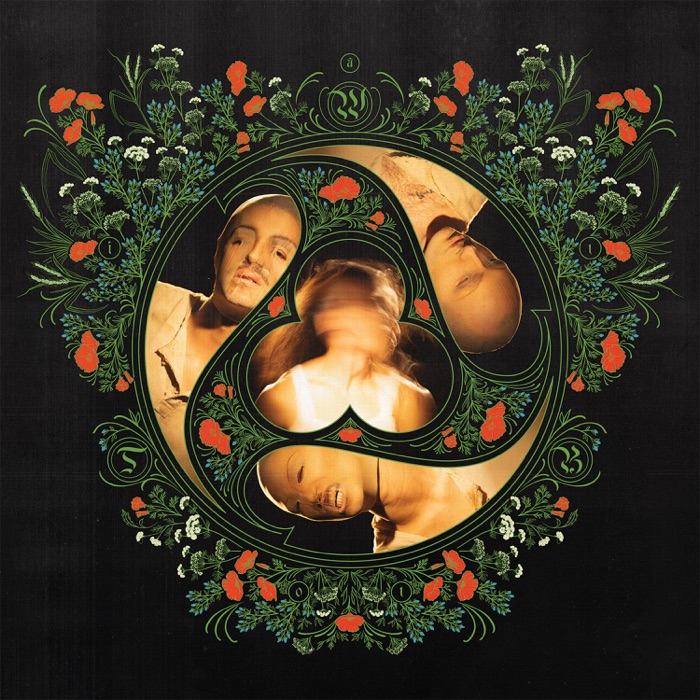
BY JOLT Staff · JUL 31 2026 · 3 min readSolar Calf is terrain. Patrick Belaga built it as nine zones of cello, woodwind, marimba, brass and sequenced noise, a place you move through rather than a run of songs you queue. It is the strongest thing he has released under his own name. You can hear the map in it. You can also hear where the map runs out.
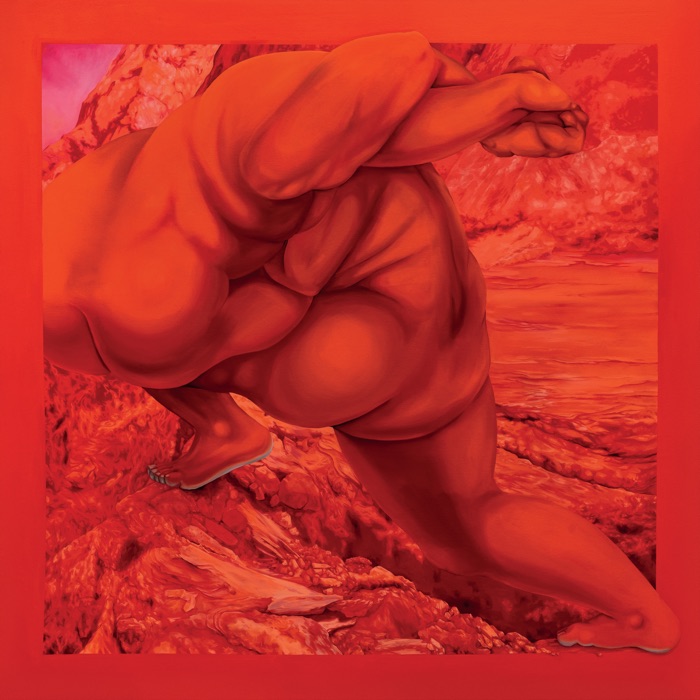
Belaga is a cellist and composer, born in 1991 in McLean, Virginia. His mother put him into cello lessons, having already found the Suzuki method community for his older brother in northern Virginia and Washington. He studied at the University of North Carolina, spent a short stretch in New York, and moved to Los Angeles in 2014, where he still works. Improvisation is the foundation of how he writes, and he has performed with Wu Tsang and Boychild, including Moved by the Motion at the Museum of Contemporary Art Los Angeles. In 2017 he scored Gaga: Five Foot Two, the Netflix documentary that premiered at Toronto that September. The catalogue behind Solar Calf includes Groundswell (2019), which drew on Xenakis and Britten and a vocabulary of rocks and mountains, Blutt (2021), built from the Hutsul music of the Carpathians with a cover painted by Giovanni Forlino, and The Sport of Love (2023). PAN bills Solar Calf as his second solo album.
He wrote and produced it himself, and Amir Shoat mixed and mastered. It arrives on PAN on July 31, 2026, digital at EUR 9 or more, in 24-bit/48kHz. The idea underneath is a playable environment of his own design, and the pull was video game music: he was drawn to Shigeru Miyamoto's Legend of Zelda series. The record's architecture follows: wide green exteriors, tight high-contrast interiors, and the corridors between zones where little happens and the air still feels charged. Repetition works as signage, marking a zone before variations push it somewhere else.
Live woodwind, piano, strings, brass and percussion get resampled and muddled in with digital instruments, and sequencer moves cut across the players mid-phrase. Nothing here is clean orchestration and nothing is pure electronics. The seam stays visible by design. Axis opens on blocky piano phrases over a floor of growls and ASMR scratches, something moving in the background that the mix declines to identify. Plotted Graph pulls the palette of Koji Kondo's Ocarina of Time score into anxious kosmische synths over jerky percussion, the closest the album comes to straight homage. Tri-meld goes further: a nod to the Triforce in the title, and a pile-up of operatic woodwinds, sheet metal clangs and melodies buried under the mix.
Upsurge is the long one, 9:20, and it takes a peaceful forest theme and folds it into a vortex of fast phrases and breathy pads. Lake is where the record exhales. Marimba hits and long cello tones settle into a rhythm that would not embarrass a beach bar at dusk, and it lands as the one piece you could leave running.
This is for people who keep contemporary classical and game scores on the same playlist, and for anyone who thought ambient records were getting too polite. It sits nearer to kosmische synth work and late-night experimental electronics than to the chamber music its parts suggest. Play it whole, loud enough to hear the room in it. If you want hooks and a chorus, there is nothing here for you, and the record makes no apology about that.
The cost of building an album as a place is that some pieces only connect. Three of the nine run short and behave like doorways, whatisthat most of all: a rummage instead of an arrival. Upsurge also holds its chaos longer than it shapes it, and by the end the sequencing has won the argument with the playing. On a commute, without the map in front of you, the middle is a hallway.
None of that undoes the record. Solar Calf earns a 4: strong and sure of its own geography, better the longer you stay in it. Belaga has made an album that asks for a walk, and the walk pays. Play it in order, in a room, once, before you decide anything about it.